


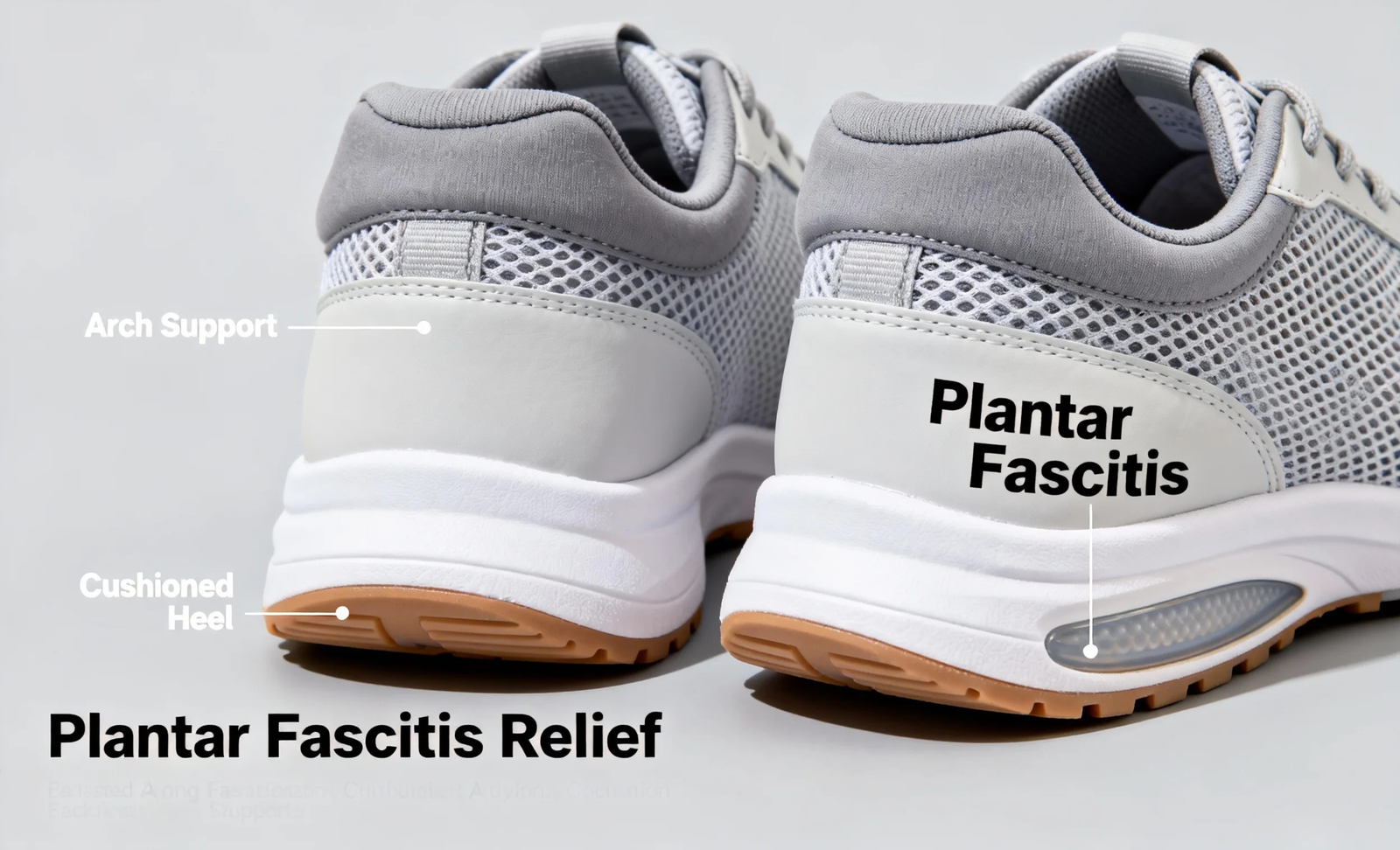
Plantar fasciitis is a common and painful foot condition that affects millions worldwide, causing heel pain and discomfort with every step. If you suffer from this condition, choosing the right footwear is essential to reduce pain and support healing. This article explores what shoes for plantar fasciitis are, why they matter, and how to select the best pair for everyday comfort and relief.
Table of Contents
What Is Plantar Fasciitis and How Does Footwear Help?
Plantar fasciitis occurs when the thick band of tissue connecting your heel bone to your toes becomes inflamed, often due to overuse, poor footwear, or certain foot mechanics. The right shoes for plantar fasciitis provide optimal support, cushioning, and stability, which can alleviate pain and prevent further injury.
Proper footwear keeps your feet in a neutral position, absorbs shock, and reduces pressure on the plantar fascia. Shoes designed for plantar fasciitis often include specialized features that target these needs, making them a crucial part of any treatment plan.
What Features Should Shoes for Plantar Fasciitis Have?
When searching for the best shoes for plantar fasciitis, it’s important to prioritize certain features:
Arch Support:
Look for shoes with built-in arch support to reduce stress on the plantar fascia. High or adjustable arches can help stabilize feet and distribute weight more evenly.
Heel Cushioning:
Shoes with extra heel padding are vital for absorbing shock with each step. A cushioned heel cup can minimize impact and prevent further irritation.
Firm Midsole:
A supportive, firm midsole keeps your foot from flexing too much, which can worsen plantar fasciitis pain. EVA foam and polyurethane midsoles are common in quality shoes for this condition.
Wide Toe Box:
A roomy toe area prevents pinching and allows natural toe spread, reducing pressure and improving comfort.
Removable Insoles:
Removable footbeds allow for custom orthotics, giving you flexibility and personalized support.
Non-Slip Outsoles:
Shoes with good traction are safer, especially if you walk on slick surfaces.
These features are essential whether you are looking for athletic shoes, casual wear, or dress shoes. Always try on shoes before purchasing, and walk around to ensure they feel supportive and comfortable.
What Are the Best Types of Shoes for Plantar Fasciitis?
There isn’t a single style that fits everyone, but certain types are generally recommended for plantar fasciitis:
Athletic Shoes:
Running, walking, and cross-training shoes often have superior arch support and cushioning. Brands like New Balance, Brooks, and Asics make specialized models for plantar fasciitis.
Orthopedic Shoes:
These are designed specifically to support the foot’s natural structure. They often feature removable insoles and customizable support.
Loafers and Flats:
Choose versions with built-in arch support and cushioned soles. Avoid flat-soled shoes with little structure.
Boots:
Look for boots with shock-absorbing soles and well-contoured insoles. Ankle boots and mid-calf styles with supportive footbeds are good options.
Sandals:
Some sandals include arch support and structured footbeds—much better than generic flip-flops.
Dress Shoes:
If you need formal footwear, prioritize cushioned insoles, arch support, and a low heel (if any).
When shopping, focus on premium materials and construction. High-quality shoes last longer and provide the consistent support your feet need.
What Should You Avoid When Choosing Shoes for Plantar Fasciitis?
Not all shoes are good for plantar fasciitis. Avoid:
- Flat flip-flops or ballet flats: They lack arch support and cushioning.
- High heels: These alter foot mechanics and increase stress on the plantar fascia.
- Worn-out shoes: Over time, cushioning and support degrade, making pain worse.
- Shoes with a hard, inflexible sole: These do not absorb shock or distribute weight effectively.
Replacing your shoes regularly and monitoring for signs of wear can make a big difference in managing plantar fasciitis.
What Else Can Help Alongside Proper Shoes?
Proper footwear is the foundation, but other strategies include:
- Using custom orthotics for extra support
- Stretching and strengthening foot muscles
- Icing the affected area
- Rest and avoiding activities that worsen pain
Consult a podiatrist for recommendations tailored to your individual needs.
Conclusion & Factory Recommendation
Understanding what shoes for plantar fasciitis to choose is key to comfort and recovery. Shoes with solid arch support, cushioning, and premium materials can dramatically reduce pain and help you stay active.
Looking for high-quality shoes designed for comfort, style, and support?
Zhongshan WEIYE Shoes Co., Ltd., based in Guangdong, China, brings over 20 years of shoemaking excellence. We produce 200,000+ pairs annually for top global brands and offer OEM/ODM services for men’s and women’s shoes—loafers, boots, heels, flats, Oxfords, and sports shoes. Partner with us for high-quality footwear solutions driven by integrity and innovation.
How are you?
I’m doing well.